EGTH · Audience Experience Design
Creating space for one of life's most difficult conversations.
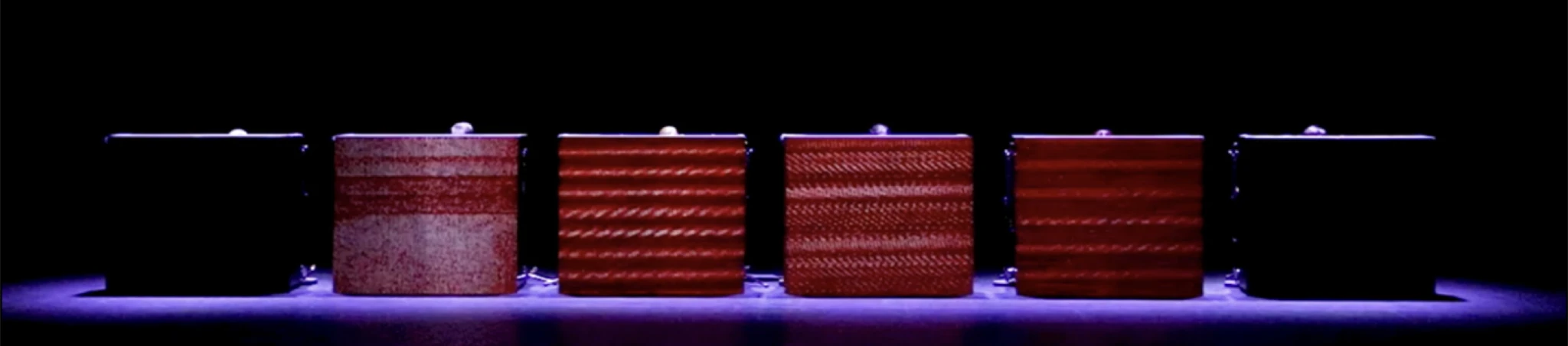
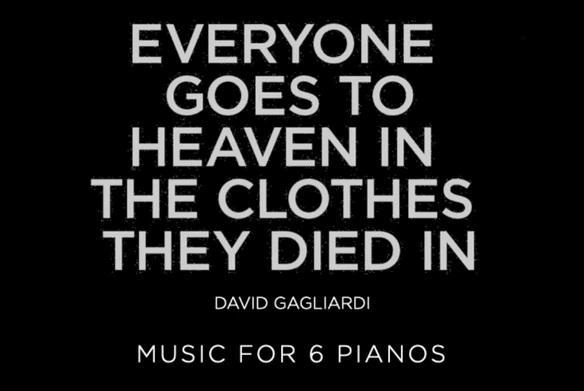
A theatrical work by Australian composer and artistic director David Gagliardi.
Performed by six pianists, the production combines music, animation, illustration, sound, and lighting to tell six stories of people in the final moments of their lives.
The work explores mortality, loss, memory, and what it means to live with the awareness that life eventually ends.
The Project
Audience responses were unusually powerful. People left emotional, reflective, and often deeply moved.
David wasn't looking to redesign the performance itself. He was interested in a different question:
What happens before the audience enters the theatre, and what happens after they leave?
The work
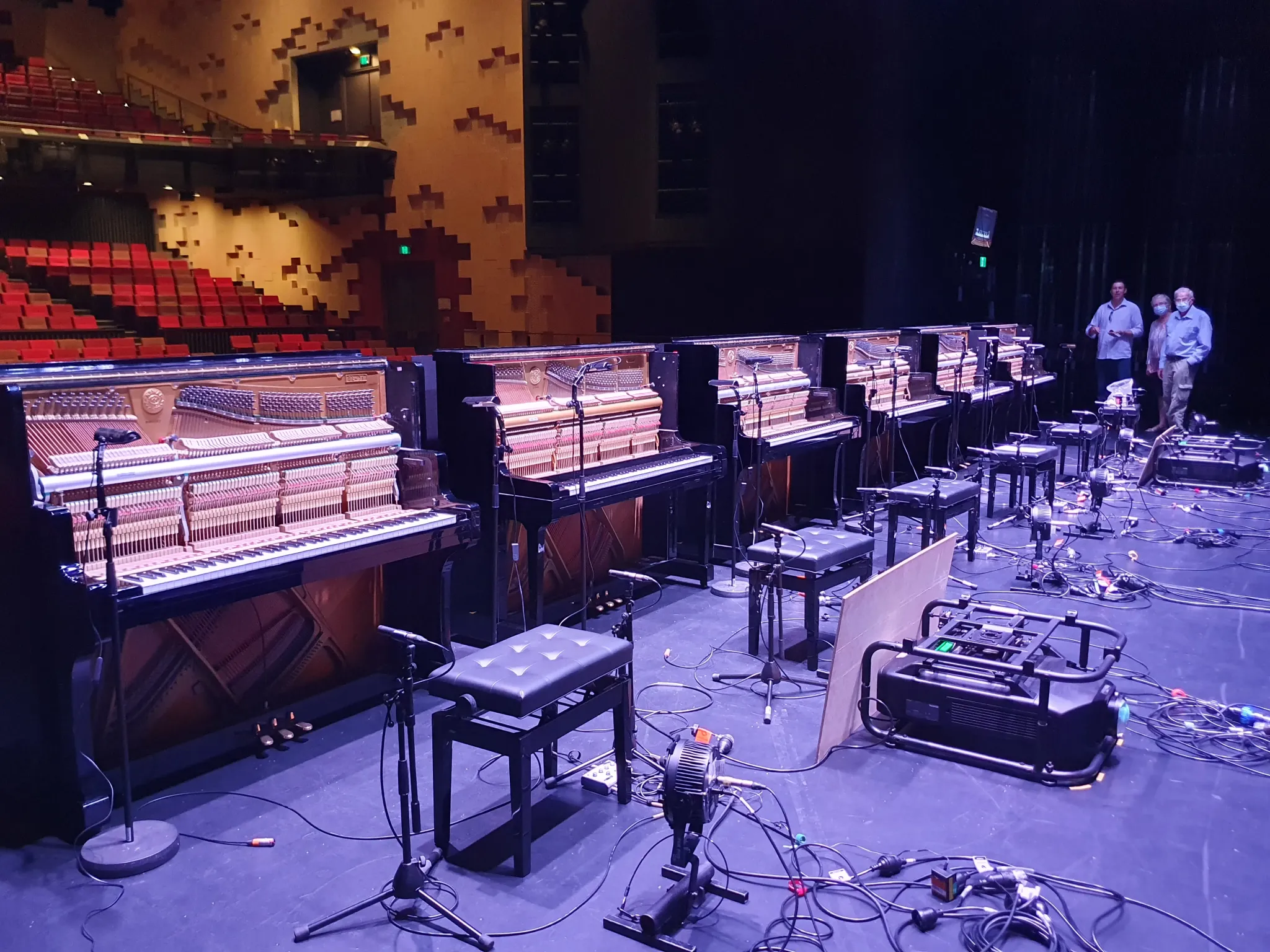
Six pianos became both instruments and screens. The performance created the emotional catalyst; the design work asked how to hold what it opened before and after the theatre.
Live-stage performance development documentation.
Why I Was Invited
David wasn't looking for theatre professionals.
He was interested in what might happen if people from product design, narrative design, and strategy approached the experience from a different perspective. The premise was that EGTH had a design problem that theatre conventions couldn't solve.
He invited me to co-facilitate a three-day workshop in Bendigo, Australia alongside narrative designer Alexander Sword and product strategist Eamon Logue.
Could conversations about mortality begin before the show? Could reflection continue afterward? Could the experience become something larger than a single evening in a theatre?
These questions became the starting point for the workshop.
Workshop structure
Workshop evidence
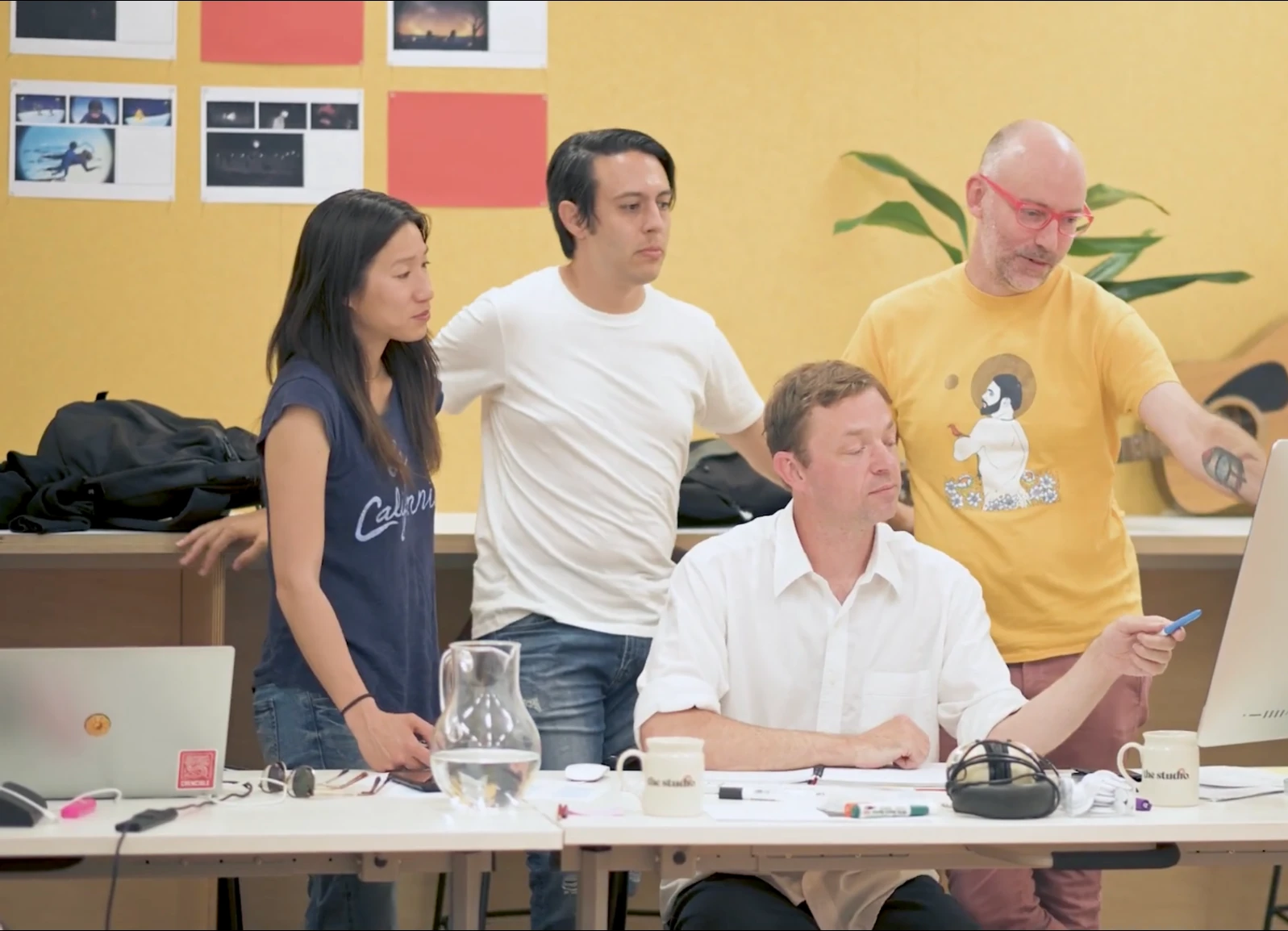
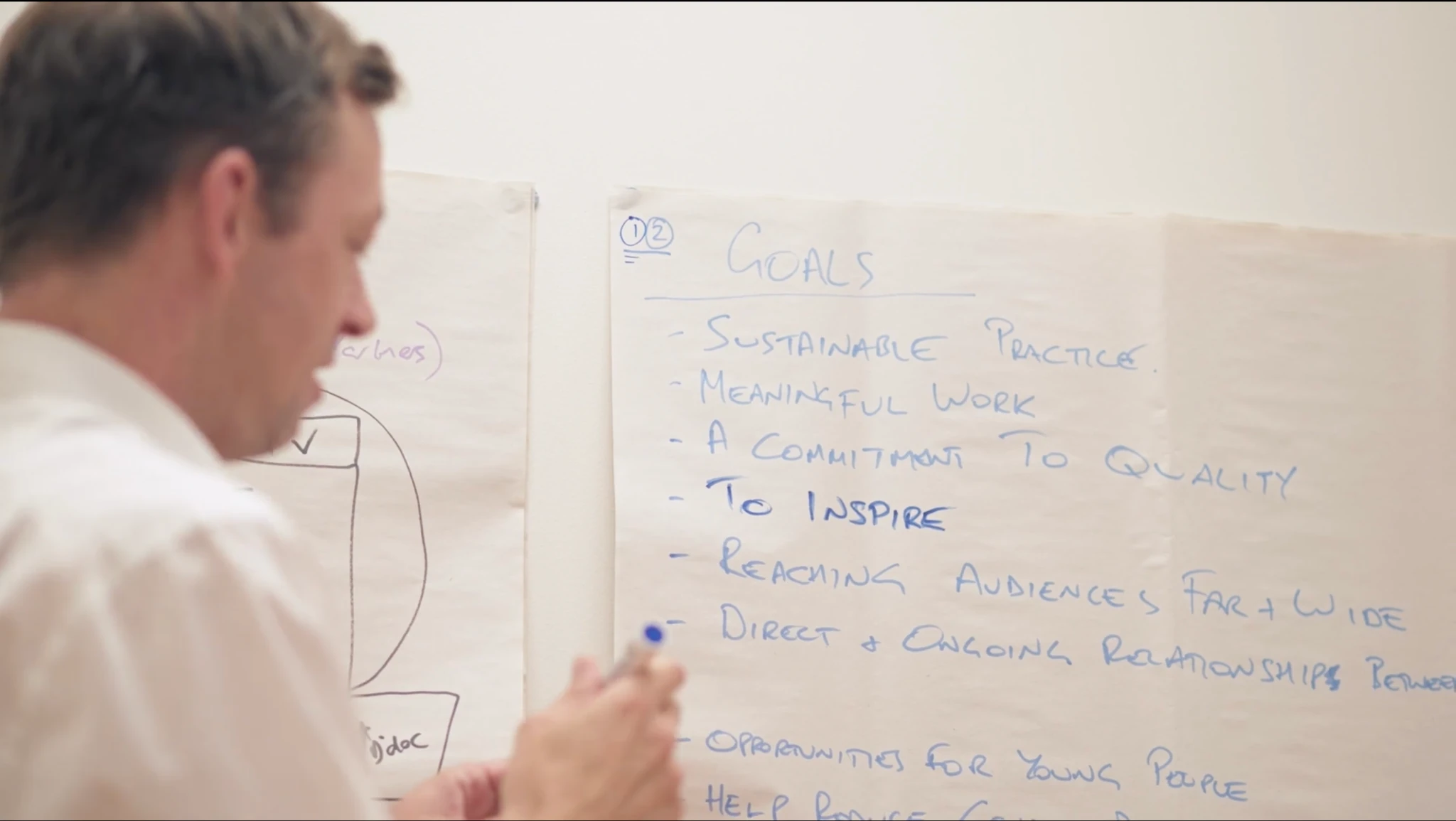
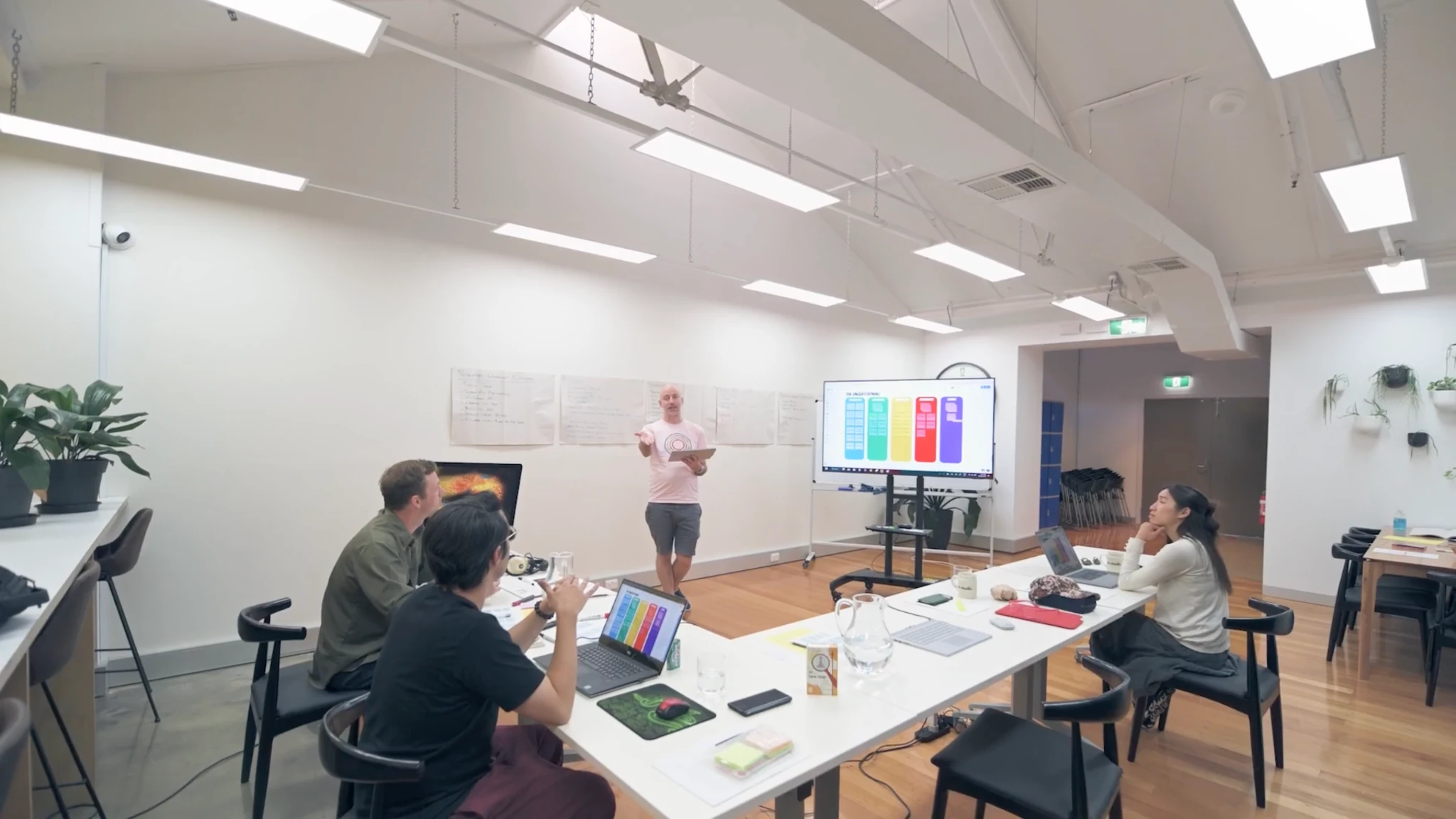
The project took shape through cross-disciplinary working sessions, wall-based synthesis, and shared mapping of the audience experience.
The Question
How do we talk about death?
Death is universal, yet many people struggle to discuss it openly.
We avoid it. We postpone it. We build language around it to make it feel more distant.
What interested me wasn't death itself.
It was what happens when people are finally given permission to engage with it.
A Different Lens
Aging leads to loneliness. Connection is what helps people navigate it.
The workshop began with a discussion on aging — and what it reveals about how we prepare for mortality. Mortality wasn't simply a topic to communicate. It was an opportunity to create connection around a subject many people experience alone.
Early workshop framing
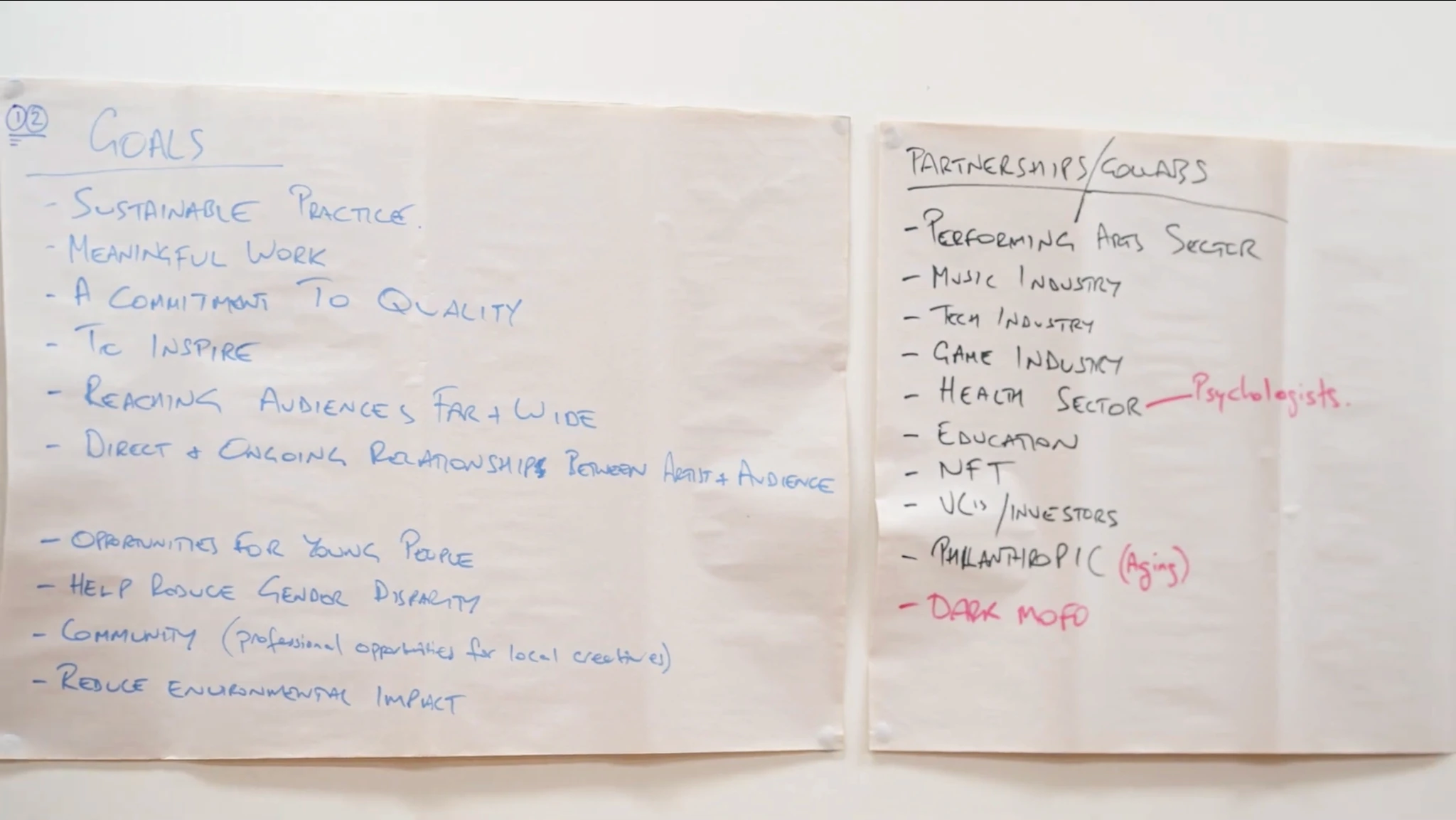
The team mapped broader goals and possible partnership contexts around the work, from meaningful artistic practice to new ways of reaching audiences.
Reframing the Experience
One insight emerged almost immediately: the performance wasn't the whole experience.
The audience journey didn't begin when the lights dimmed. It began when someone first encountered the idea of attending a performance about death. It continued as they decided whether to buy a ticket. It deepened during the performance itself. And it often persisted long afterward as people processed what they had seen, felt, and remembered.
Death doesn't follow theatre convention. The subject doesn't stay contained in a 53-minute window.
The spaces in between the show
are the show.
Instead of viewing the performance as a standalone event, we began viewing it as one moment within a much larger emotional journey.
Understanding Different Relationships With Death
To better understand that journey, we mapped the audience experience surrounding the performance.
What emerged wasn't a single audience. It was six very different starting points.
Some people had never seriously questioned what death meant to them and arrived with vague discomfort but no real framework. Others had rejected religious or cultural narratives entirely and brought their own form of certainty. Some were caught between inherited taboos and a genuine desire to engage. Others arrived carrying questions they had never been able to ask anywhere. A few approached death as an intellectual subject, holding it at arm's length through analysis. And some had already done the work through loss, illness, or deliberate preparation and arrived with a kind of quiet readiness.
Audience archetypes
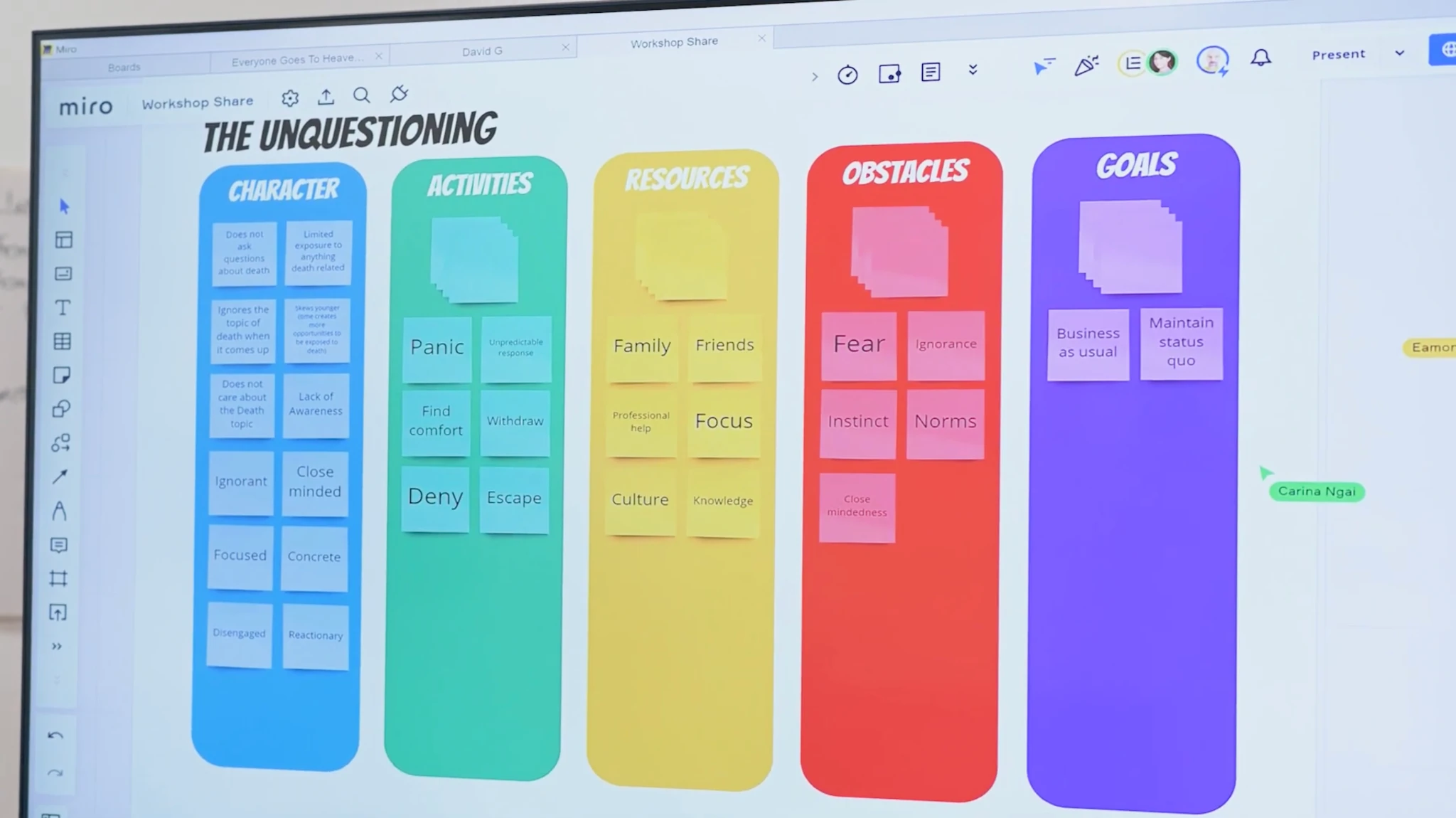
Workshop artifact: one of the audience archetypes mapped across behaviors, resources, obstacles, and goals.
01
The Unquestioning
02
The Militant Atheist
03
Stuck in Taboos
04
Questions Without Answers
05
The Academic
06
Those Who Are Prepared
Each arrived carrying different beliefs, fears, experiences, and assumptions. The challenge wasn't communicating a single message. It was creating space where many perspectives could coexist.
Workshop Artifact — Audience Journey Map
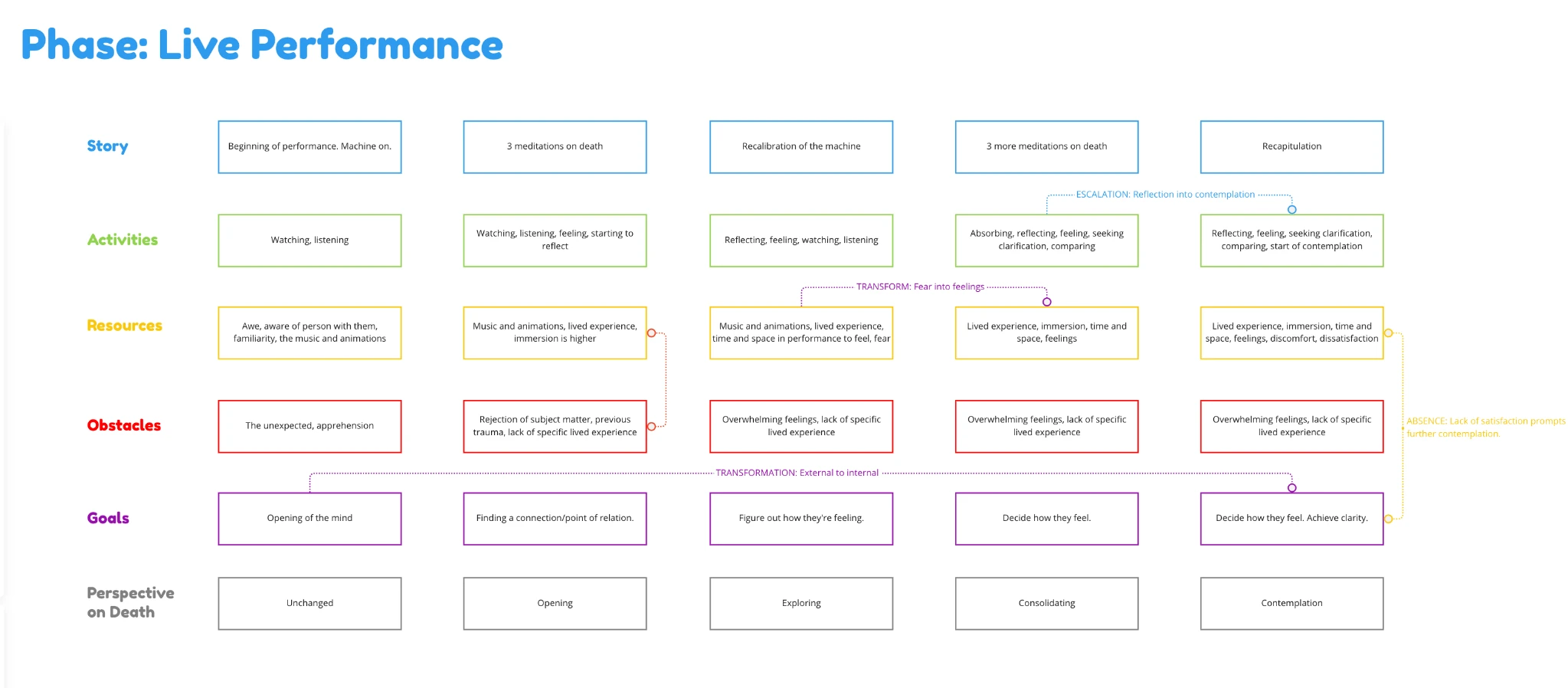
One of the workshop outcomes. Traces audience story, activities, obstacles, goals, and the progression of perspective on death from entry to exit.
What We Learned
One pattern appeared repeatedly throughout the workshop.
The emotional reactions weren't caused by confusion about the work itself. They came from confronting questions many people rarely have opportunities to explore.
This shifted the design challenge entirely.
Before, we questioned
How do we help people understand the performance?
Now, we question
How do we help people engage with mortality?
People weren't struggling to understand the performance. They were struggling to understand themselves within it. That distinction changed everything.
Designing Around the Conversation
The workshop generated a series of questions that shaped future directions for the experience. Rather than treating arrival and departure as logistical moments, we began treating them as meaningful thresholds.
The goal wasn't to provide answers. It was to create conditions for discussion.
Before the show
After the show
Expanding the Experience
The workshop reframed EGTH from a single performance into an experience ecosystem.
Future concepts explored how audiences might be supported before, during, and after the show through transitional spaces, reflection environments, community participation, and ongoing dialogue with the artist.
The goal was not to extend the performance. It was to extend the conversation.
The performance remained the catalyst. The conversation became the experience.
Experience architecture
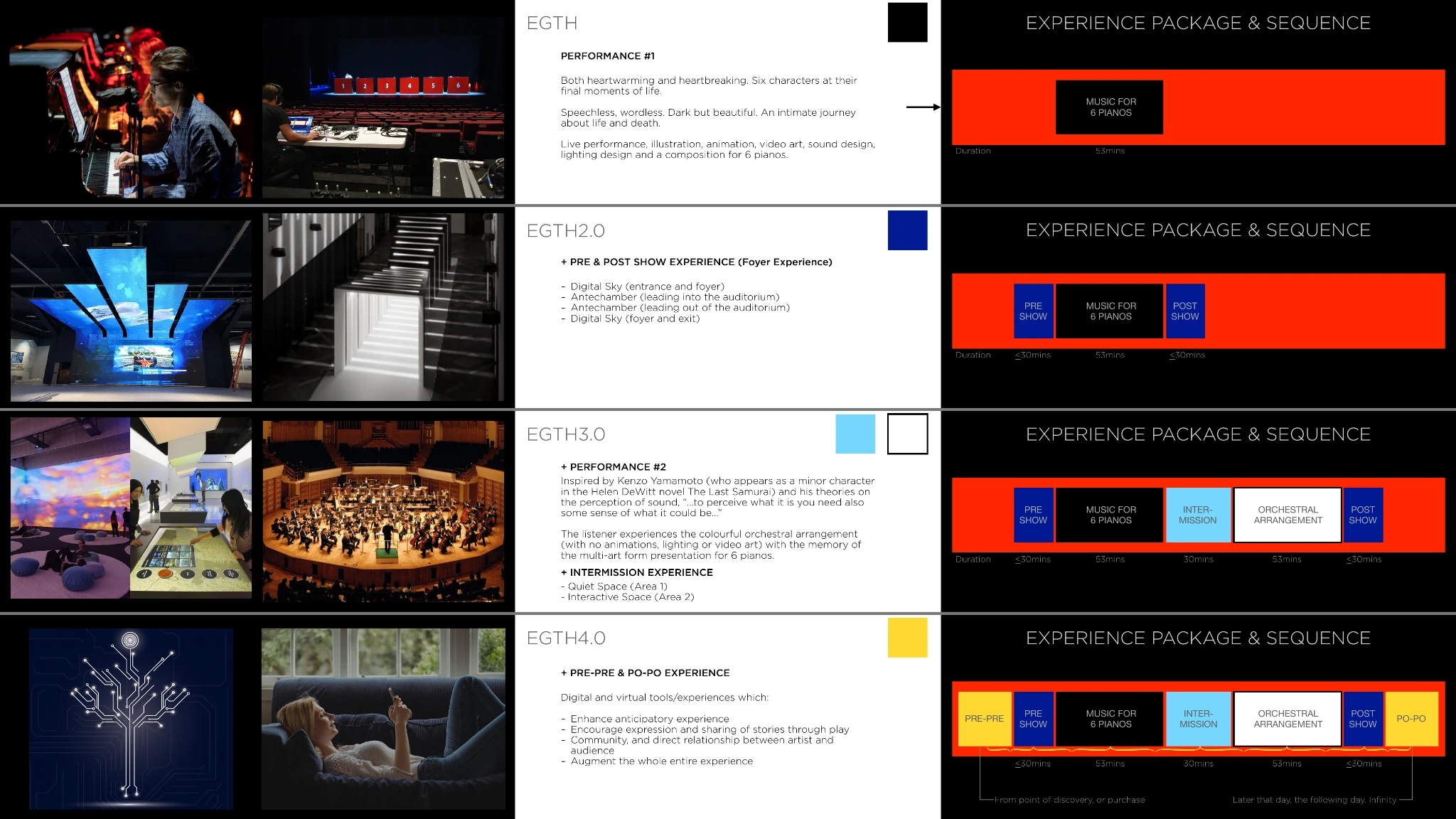
The workshop direction extended the performance into a broader experience sequence, from pre-show preparation through post-show reflection and longer-term audience participation.
Why This Matters
Most of my career has been spent designing products, platforms, and emerging technologies.
This project reminded me that the same design tools can be applied far beyond software. Research, journey mapping, audience understanding, systems thinking, and experience design are ultimately ways of understanding people.
The medium changes. The human questions do not.
Reflection
Most design projects seek clarity. This project embraced uncertainty.
Mortality isn't a problem to solve. There is no correct path through grief, acceptance, loss, or meaning. The workshop challenged many of my assumptions about design.
Not every challenge requires a solution. Some require a space — a space to reflect, to connect, to engage with questions that resist easy answers.
More importantly, it expanded my definition of design. It reminded me that some of the most meaningful parts of an experience happen outside the thing we design.
Designing around mortality wasn't about helping people understand death. It was about helping people talk about it.
Some experiences don't need better answers. They need better spaces for conversation.
Carina NgaiExperience Strategist
Alexander SwordNarrative Designer
Eamon LogueGame Designer
David GagliardiArtistic Director & Composer