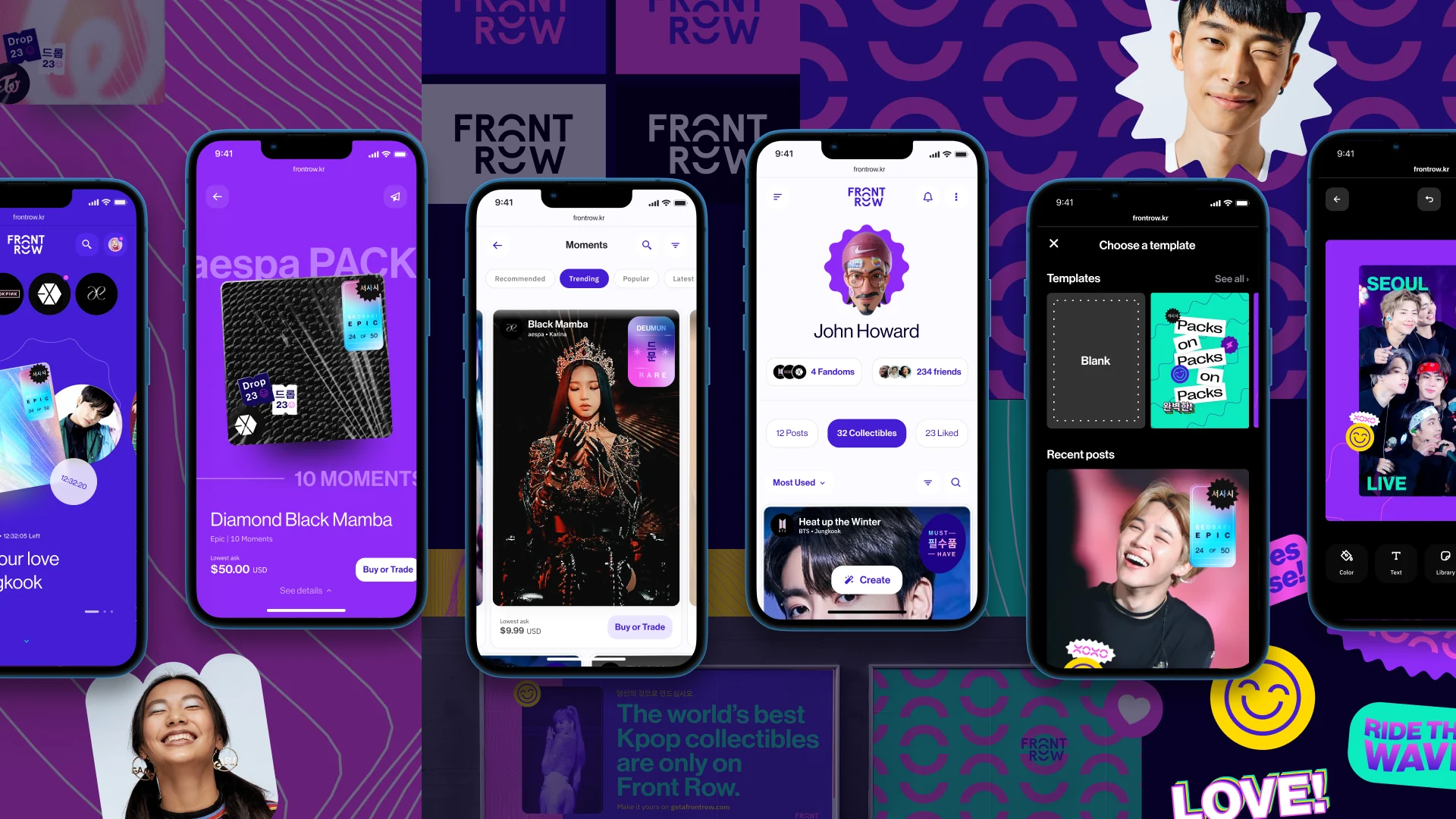
MetaLab
When K-pop fandom stopped behaving like a marketplace.
The Starting Point
The founders came with a reference: NBA Top Shot, a wildly successful digital collectibles platform built for sports fans — driven by scarcity, limited drops, competitive rankings, and the thrill of ownership. They wanted that same model for K-pop fans.
The logic was intuitive. The analogy was wrong.
At that point, Front Row was still a hypothesis — a name, a reference deck, and a product direction borrowed from another audience. No branding, no product, no design. That was our job. But before designing anything, we needed to understand whether the model actually fit the people it was built for.
The Leadership Move
The team was ready to execute. The client was eager to see screens. I redirected both. Before a single wireframe, I brought in a design research partner, rewrote the roadmap to front-load discovery, and reset expectations with the founders about what the first several weeks would produce.
Clients measure progress in deliverables. Teams want to know what they're building. I offered ambiguity instead — and held it — because the alternative was committing a design system and feature set to a model that might not fit the people it was built for.
Giving the team enough confidence that it's okay not to see the end of what we'd be delivering yet. The team was nervous in the first half — not knowing what they were building, not knowing where it would land. That discomfort was real. But premature convergence would have meant designing the wrong product very well.
"The product changed before the interface existed."
What Research Revealed
We designed the research to test the inherited model, not validate it. Collectors and K-pop fans were studied in parallel, followed by in-depth interviews conducted in friend pairs.
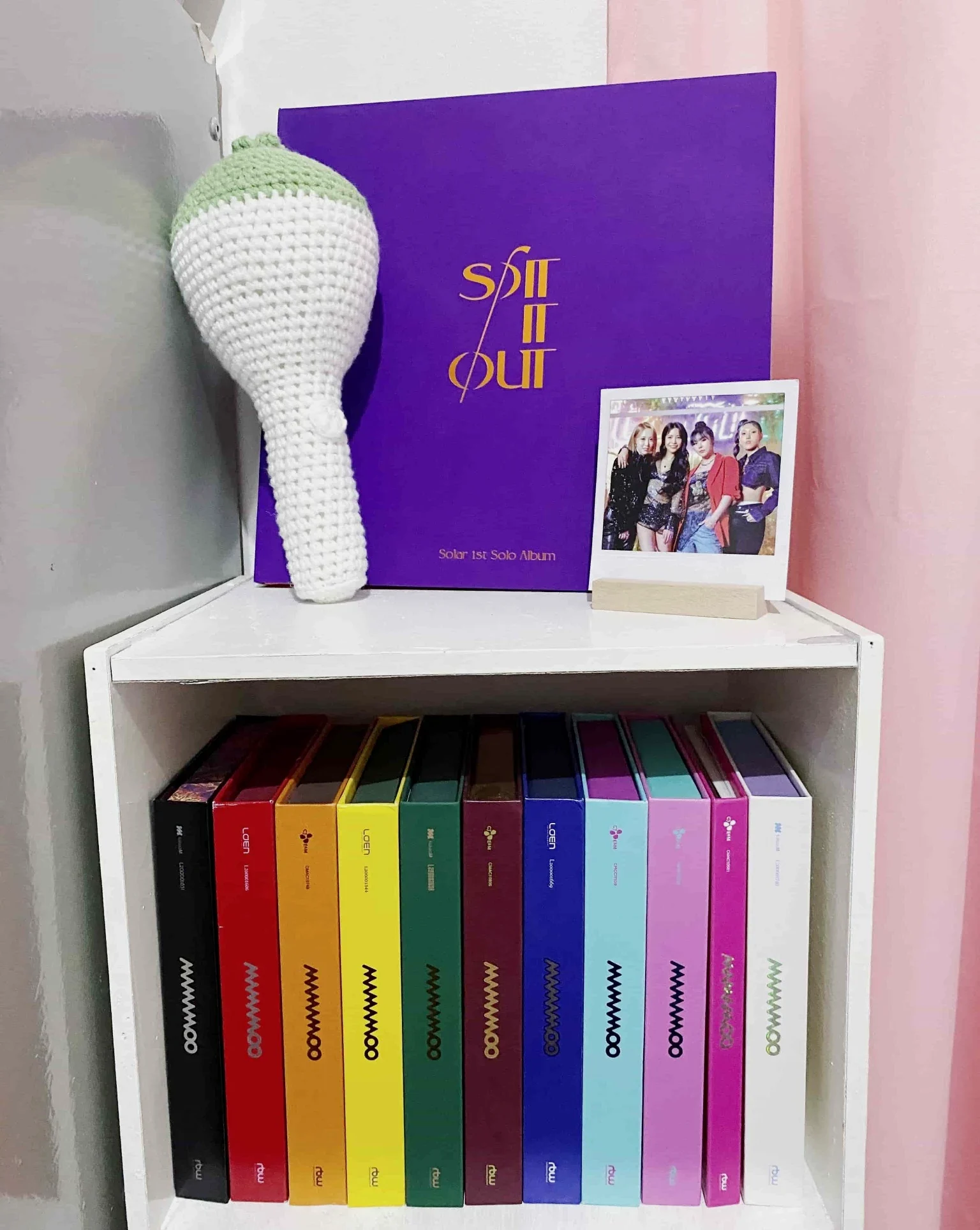
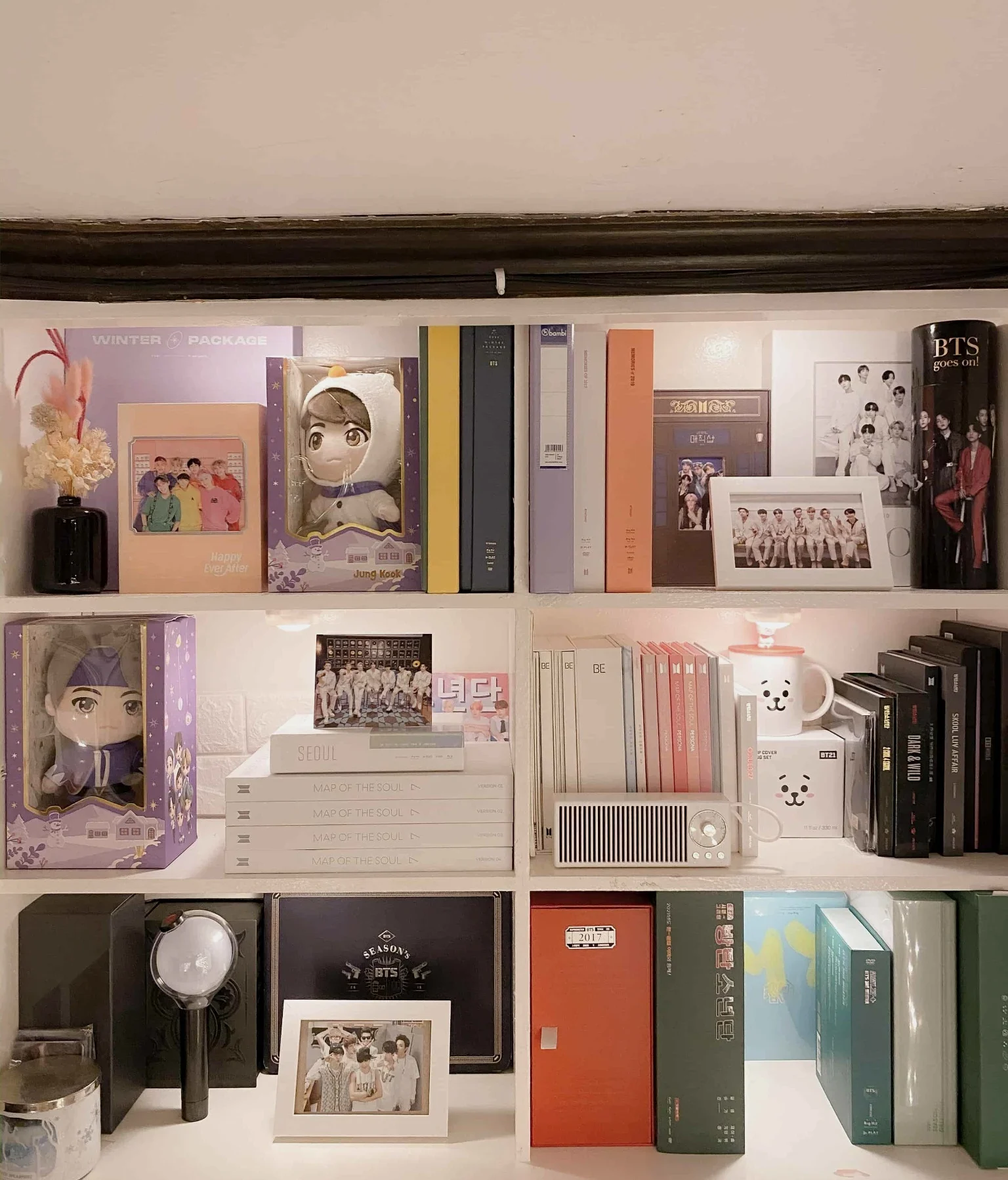
The findings revealed a fundamental mismatch. Sports collectors were motivated by scarcity and competition. K-pop fans cared more about participation, identity, and emotional connection.
The issue wasn't the feature set. The underlying assumptions were wrong.
The Reframe
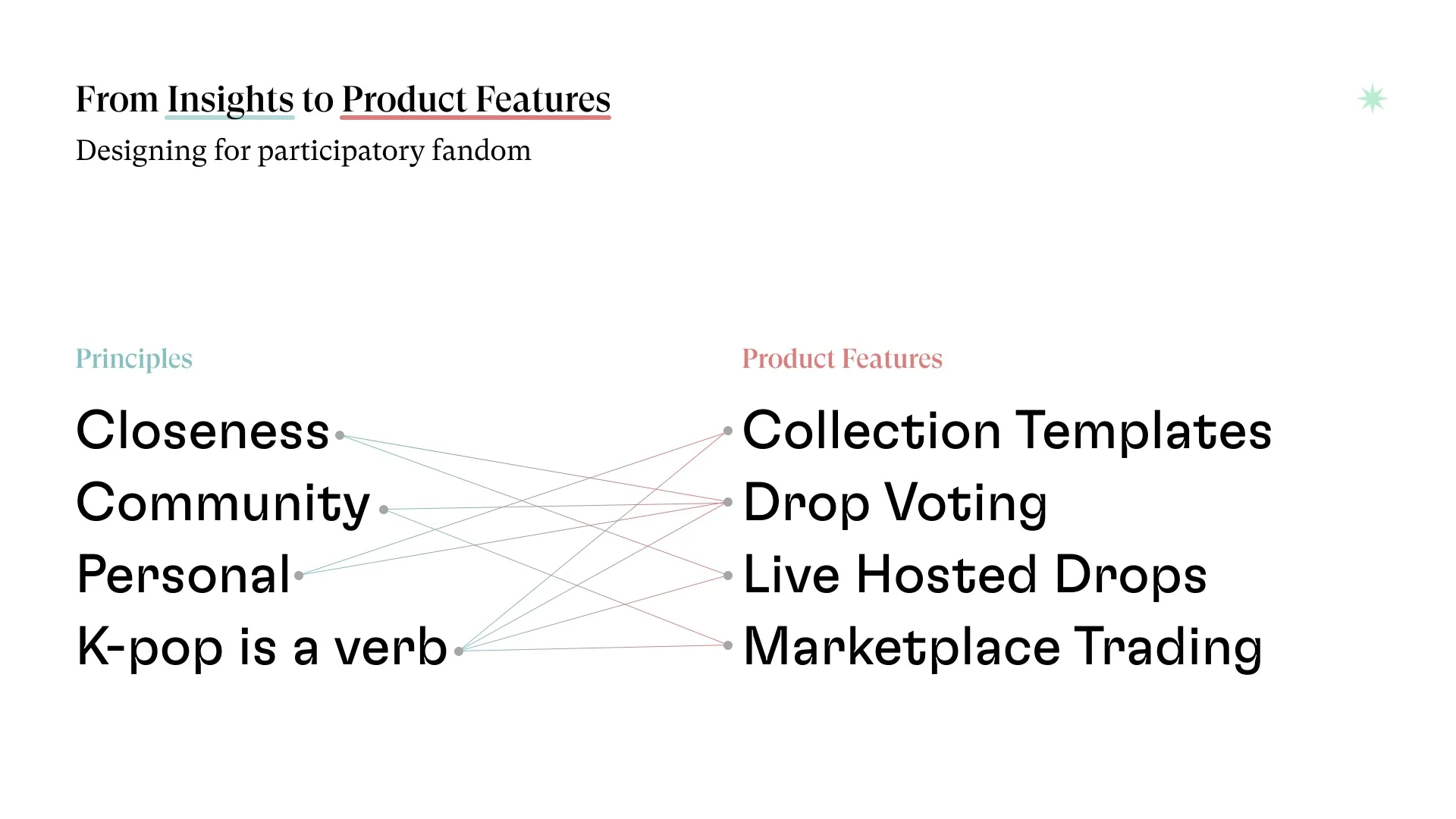
This wasn't a feature pivot. It was a product philosophy rewrite. The original model asked: what can fans own? The redesigned product asked: how can fans participate? Everything followed — roadmap, feature priorities, creative direction.
Not because we invented a new direction, but because we listened carefully enough to understand what K-pop fans were already doing in the world — and built systems to support and elevate those behaviors.
"The product started making sense once the fans did."
What Emerged from the Shift
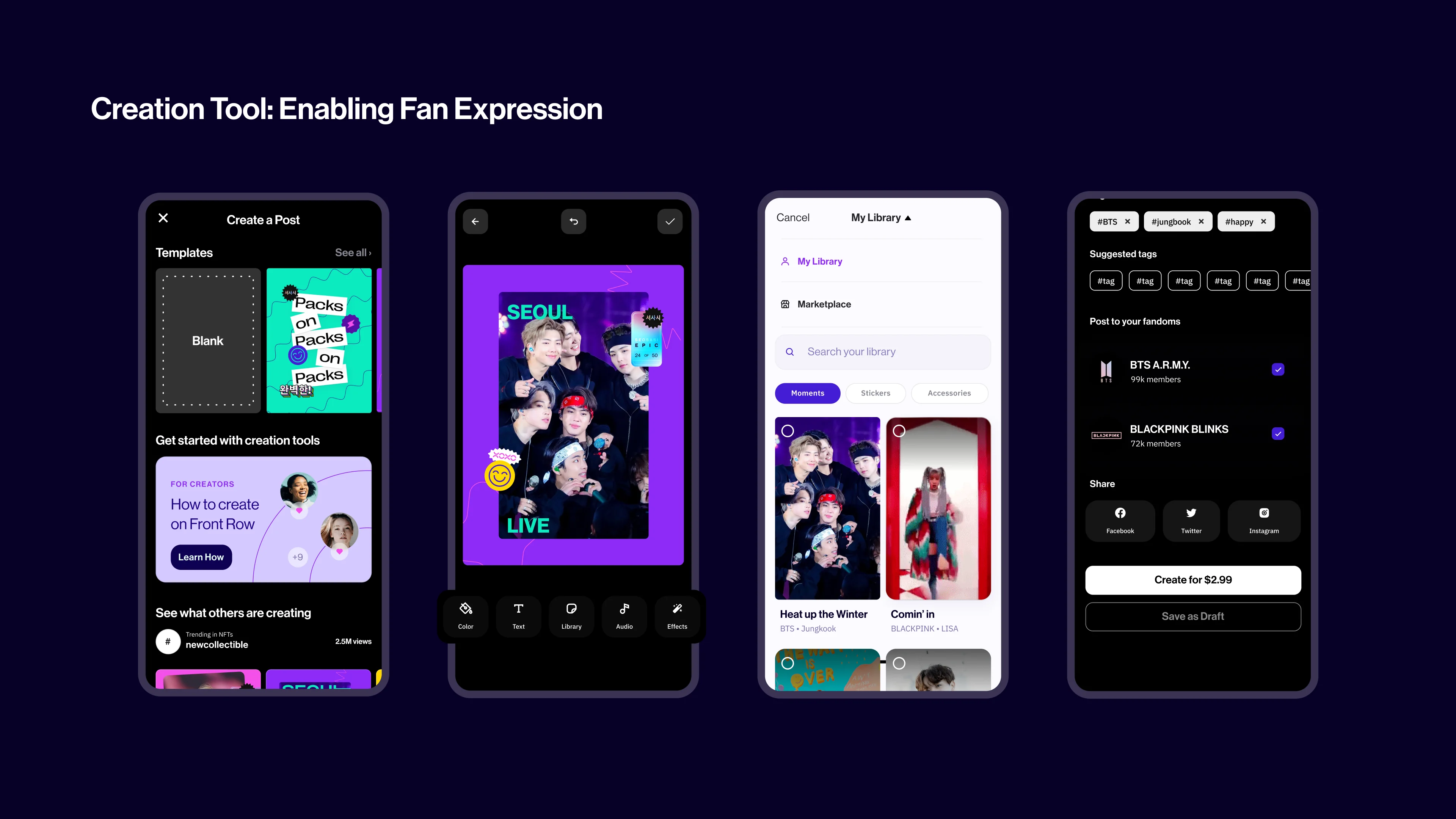
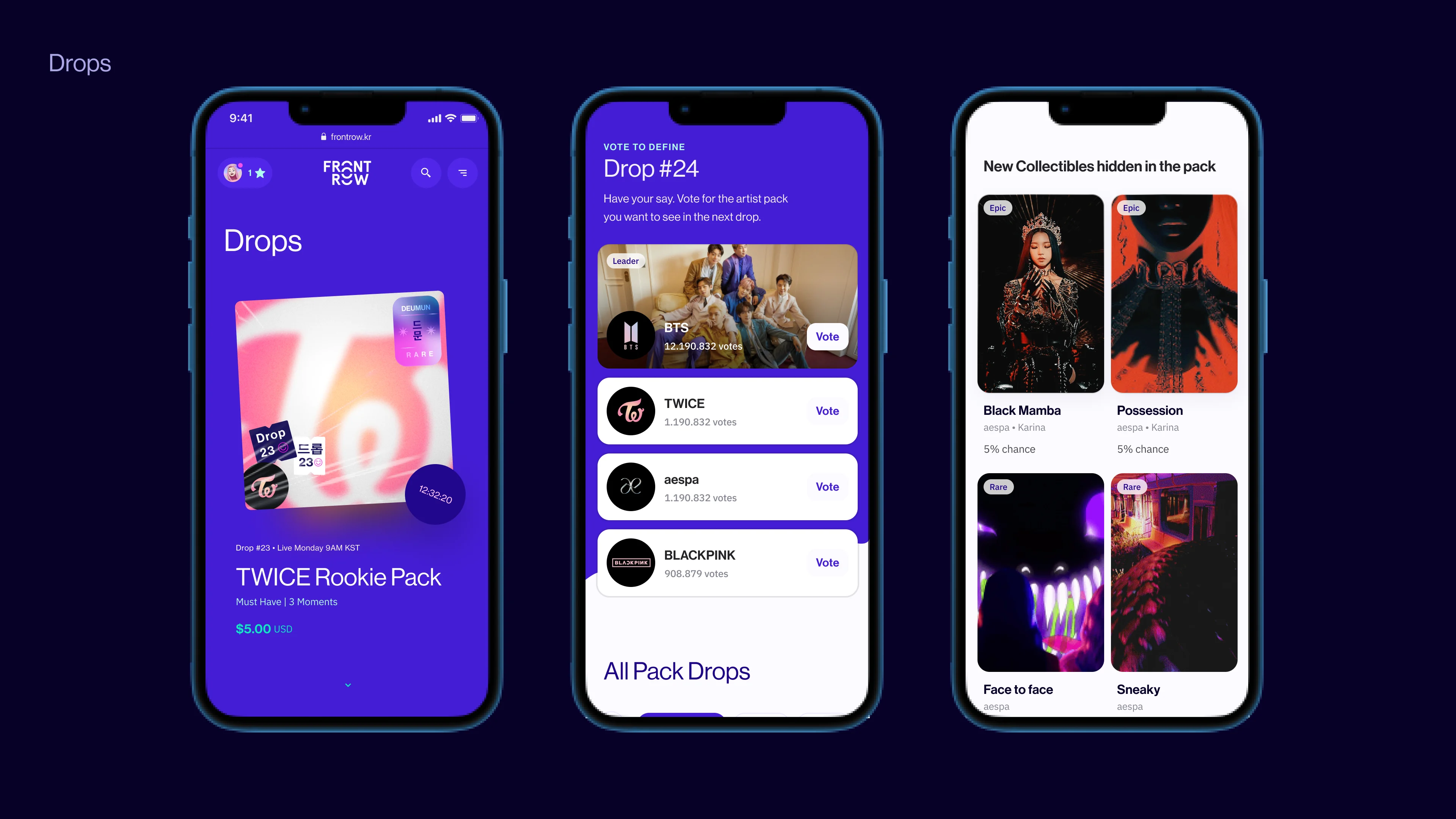
What emerged wasn't a marketplace for ownership, but a system for participation. The product shifted toward fan expression, collective rituals, and closeness between idols and their communities.
The features weren't invented from scratch. They emerged from observing what fans already valued, created, and shared with each other.
Reflection
Front Row began as an NFT marketplace modeled after NBA Top Shot. What emerged was something else entirely: a system built around participation, expression, and closeness between fans and idols.
My contribution wasn't the interface. It was recognizing that the inherited model misunderstood the behavior underneath it — and creating enough space for the right product to emerge before the team committed to building the wrong one well.
Once the shift became clear, the product followed quickly. Features stopped being speculative and started reflecting what fans were already doing in the world.
The most important shift wasn't in the interface. It was in understanding fandom as culture — not transaction.
Carina NgaiDesign Director
Simon RobinsonDesign Lead
Alan MaranhoPrincipal Designer
Gunnar GrayPrincipal Designer
Sean DonahuePrincipal, RCD/LACore Faculty, Graduate Media Design Practices (MDP), ArtCenter College of Design
Stevie WildProject Manager
Adam JiwaClient Partner
Wesley YuEngineering Director